

Types of Landscape Drains: Which Drainage System Is Right for Your Yard?
There is no single best landscape drain. The right choice depends on where water collects, how it moves, and how much of it there is. The French drain is the most popular style, catch basins and dry wells are among the most efficient at moving or storing large volumes, and dry creek beds and rain gardens are the most attractive. Drainage and irrigation work as a pair: a yard that is watered well but drains poorly will drown roots, wash out mulch, and waste water. This article walks through the drain styles landscapers install most often, how they compare, and the guidelines that make them work.
Why Drainage Matters for Landscape Irrigation
Irrigation puts water into the landscape; drainage decides where it goes next. Soil that stays saturated pushes oxygen out of the root zone, which leads to root rot, yellowing turf, fungal disease, and standing water that breeds mosquitoes. Heavy clay soils, common across much of the Southeast, drain slowly and make the problem worse after storms and long sprinkler cycles.
Landscapers plan around two kinds of water. Surface water sheets across lawns, patios, and driveways during rain. Subsurface water sits below grade, saturating soil and seeping toward foundations. Every drain style is built to handle one or both, and matching the drain to the type of water is the most important decision in any drainage project.
The Most Popular Drain Styles Landscapers Install
French Drains
The French drain is the workhorse of residential drainage. It is a gravel-filled trench with a perforated pipe at the bottom, wrapped in filter fabric, that collects groundwater and carries it downhill to a safe outlet. Landscapers install them along foundations, at the base of slopes, and across lawn areas that stay soggy for days. They are popular because they disappear under sod or stone once finished and they reach subsurface water that surface drains cannot.
Catch Basins and Yard Drains
A catch basin is a box set at the lowest point of a yard with a grate on top. Surface water drops through the grate, leaves and sediment settle in the basin, and a solid pipe carries the water away. Smaller versions, often called yard drains or area drains, are the go-to fix for a spot that puddles after every storm.
Channel (Trench) Drains
A channel drain is a long, narrow grated trough set flush with a hard surface. It is used at the bottom of driveways, along patio edges, around pool decks, and in front of garage doors. Its job is to intercept water sheeting off pavement before it reaches the lawn or the house.
Downspout Extensions and Pop-Up Emitters
Roof runoff is often the largest single source of water in a yard. Landscapers connect downspouts to buried solid pipe that runs to a pop-up emitter out in the lawn. The emitter opens under water pressure and closes when the flow stops, so it stays low-profile and mower-friendly.
The Most Efficient Drainage Options
Efficiency comes down to how much water a system moves or stores for the cost, and how little upkeep it needs. For heavy surface flow, a catch basin tied to solid pipe is hard to beat. For saturated soil, a French drain is the most effective tool. Where there is no good place to send the water, a dry well or swale usually wins.
Dry Wells
A dry well is an underground chamber or gravel pit that stores runoff and lets it soak slowly into the surrounding soil. It keeps water on the property, recharges groundwater, and solves the common problem of a yard with no downhill outlet. Performance depends on how fast the soil absorbs water, so landscapers often run a percolation test first; in dense clay, an undersized dry well can fill and back up.
Swales
A swale is a shallow, wide, gently sloped channel of turf or stone that guides water across a yard. There is no pipe to clog, installation cost is low, and a well-built swale can carry a large volume of water. The tradeoff is space: swales need room and a gentle, consistent grade to work.
Pairing Drains With Smart Irrigation
The most efficient landscapes treat drainage and irrigation as one system. Rain sensors and smart controllers skip watering cycles after storms, drip irrigation delivers water only to plant roots in beds, and separate zones keep shady or low-lying areas from being overwatered. Cutting excess irrigation means the drains only have to handle what the rain delivers.
The Most Aesthetic Drainage Options
Some drainage solutions are meant to be seen. These styles move water just as well as buried systems while adding texture, color, and planting space to the landscape.
Dry Creek Beds
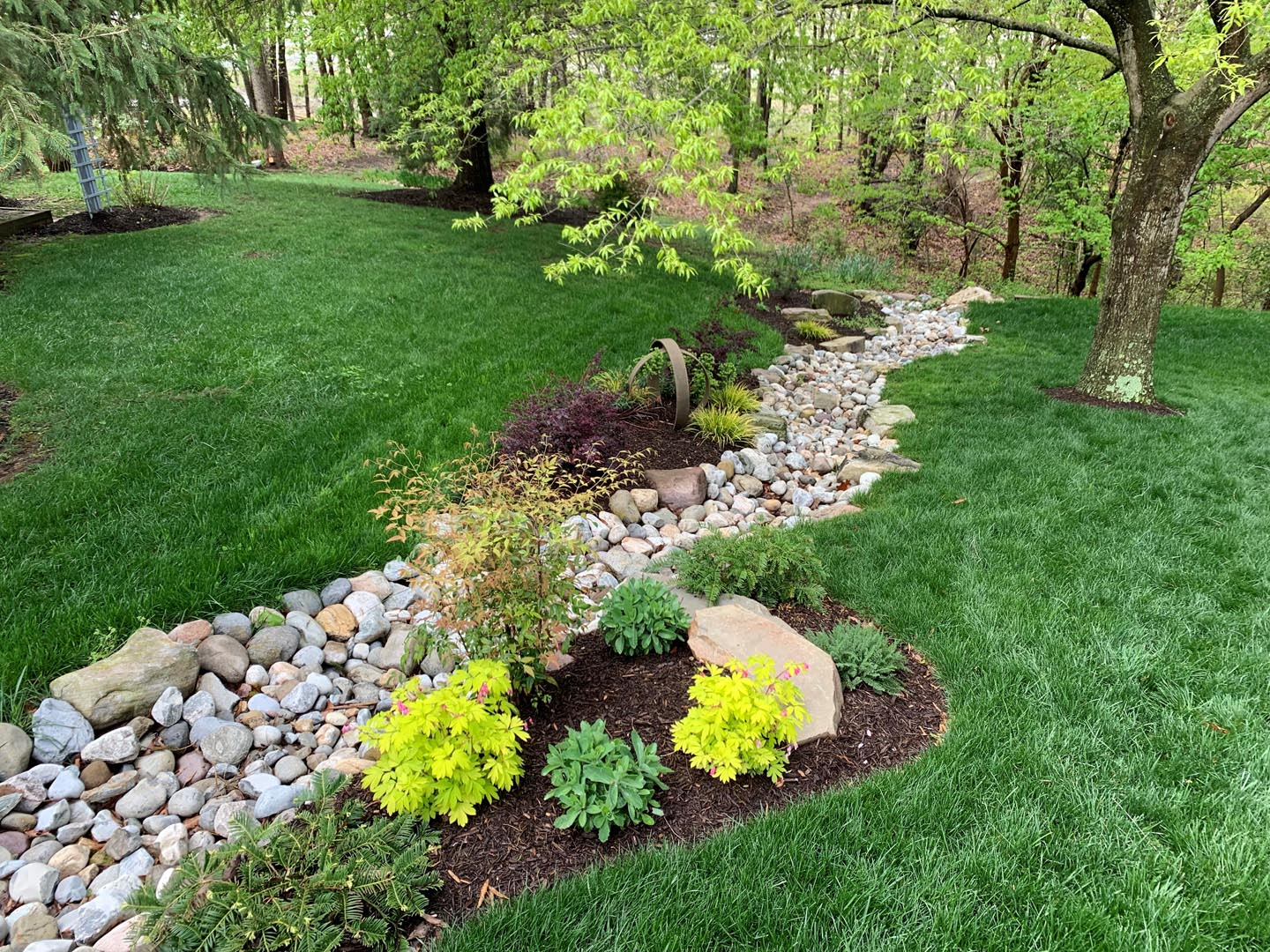
A dry creek bed is a winding channel lined with river rock and boulders that mimics a natural streambed. It carries water during storms and stays a landscape feature the rest of the year. Landscapers often build one over filter fabric or a French drain and soften the edges with ornamental grasses, sedges, and moisture-tolerant perennials.
Rain Gardens
A rain garden is a shallow, planted depression that collects runoff from roofs, patios, or driveways and lets it soak in, typically within 24 to 48 hours. It is planted with native, water-tolerant species that attract pollinators and filter pollutants. Some municipalities actively encourage rain gardens as a stormwater practice.
Permeable Pavers and Decorative Grates
Permeable pavers let water pass through their joints into a gravel base, turning a patio or walkway into part of the drainage system. Where a channel drain is needed, decorative cast iron, brass, or slot-style grates make it blend into the hardscape instead of looking like utility hardware.
Landscape Drain Types at a Glance
Drain Type | Best For | Water It Handles | Relative Cost | Visibility |
French drain | Soggy lawns, foundations, base of slopes | Subsurface | Moderate | Hidden under sod or stone |
Catch basin / yard drain | Recurring puddles at low points | Surface | Low to moderate | Small grate |
Channel drain | Driveways, patios, pool decks | Surface | Moderate to high | Linear grate |
Downspout extension + emitter | Roof runoff | Surface | Low | Minimal |
Dry well | Yards with no downhill outlet | Surface and subsurface | Moderate | Hidden |
Swale | Large yards with sheet flow | Surface | Low | Blends into lawn |
Dry creek bed | Slopes and natural runoff paths | Surface (subsurface with a drain beneath) | Moderate | Decorative feature |
Rain garden | Roof, patio, and driveway runoff | Surface | Low to moderate | Decorative feature |
Installation Guidelines Landscapers Follow
A drain is only as good as its installation. These are the standards professional landscapers work from on most residential jobs.
Locate Utilities First
Every trench starts with a call to 811, the free national call-before-you-dig service, which marks buried gas, electric, water, and communication lines. In North Carolina, NC 811 must be contacted at least three full working days before digging. Landscapers should also map existing irrigation lines so a new trench does not cut through a sprinkler zone.
Get the Slope Right
Water only moves if the pipe runs downhill. A minimum fall of 1 percent, roughly 1/8 inch per foot or 1 inch every 8 feet, is the common baseline, and 2 percent is better for solid pipe carrying surface water. The ground around the house should also slope away from the foundation, typically 6 inches over the first 10 feet.
Use the Right Materials
French drain trenches are usually 18 to 24 inches deep and 6 to 12 inches wide. They are filled with clean, washed gravel and lined with nonwoven filter fabric so soil does not clog the stone. Perforated pipe goes in subsurface drains, solid pipe goes in catch basin and downspout lines, and 4-inch pipe is standard for most homes. Cleanouts at bends and on long runs make future maintenance possible.
Send Water Somewhere Safe
Every system needs a proper outlet: a daylight exit downhill, a street curb where allowed, a swale, a dry well, or a rain garden. Discharge points should sit at least 10 feet from the foundation. Water should never be redirected onto a neighbor’s property, which can create liability, and HOA and local stormwater rules may limit where and how outlets are placed.
Frequently Asked Questions
What is the most common type of landscape drain?
The French drain. It handles saturated soil and groundwater, works in lawns and along foundations, and is hidden once the trench is covered, which makes it the most widely installed residential drainage system.
What is the difference between a French drain and a channel drain?
A French drain collects water below the surface through a perforated pipe in a gravel trench. A channel drain collects water on the surface through a grate set into pavement. Many properties use both: channel drains on the hardscape and French drains in the soil.
Can overwatering cause drainage problems?
Yes. Long or frequent irrigation cycles can saturate soil the same way heavy rain does, especially in clay. Adjusting run times, adding a rain sensor, and switching beds to drip irrigation often reduce standing water before any drain is installed.
How long does a French drain last?
A properly built French drain with clean gravel and filter fabric can last for decades. Drains built without fabric, or with soil washed into the gravel, can clog within a few years.
Which drainage option looks the best?
Dry creek beds and rain gardens are the most attractive choices because they double as landscape features. Permeable pavers and decorative grates are the best options when drainage has to run through a patio or driveway.
Do I need a permit to install a yard drain?
Small residential drains usually do not need a permit, but rules vary. Connecting to a municipal storm sewer, discharging into a public right-of-way, or working in an HOA community can require approval, so check local requirements before work begins.
Need a Drainage Solution That Works With Your Irrigation?
Use Crawford Landscaping for your drainage solutions


